
“Do stuff. be clenched, curious. Not waiting for inspiration’s shove or society’s kiss on your forehead. Pay attention. It’s all about paying attention. Attention is vitality. It connects you with others. It makes you eager. Stay eager.”
― Susan Sontag
Curiosity is one of my favorite words. It pushes us to think beyond what we know, what we assume, what we are used to. When we intentionally invite it to become a companion that walks beside us, our lives will change because we expand our understanding of the world within and around us.
A teacher I turn to when it comes to curiosity is Mary Oliver. She is an American poet who shares a list inside her poem “Sometimes,” which is found in the collection Red Bird. She writes:
Instructions for Living a Life
- Pay attention.
- Be astonished.
- Tell about it.
If you read a lot of Mary Oliver’s poetry, you will find many poems about nature. She was known to take daily walks in her beloved woods to visit the many animals, birds, trees, and Blackwater Pond. She would return home and often write a daily poem. So on the surface, her instructions might seem to be focused on nature and how we can easily be astonished by what we find there. However, I see these instructions as an invitation toward letting curiosity guide our interactions with others and the broader world around us AND our internal relationship with ourselves. Let’s look closer.
Paying attention is a pathway of noticing and looking up beyond the daily to-do list and other things that pull us away from being present. Attention invites in focus and awareness of what is happening right now.
Being astonished is to move from noticing to curiosity. At this step, you might tap into your senses, observe your emotions, ask yourself questions about what you’re experiencing. Maybe you will even find your way to wonder, which could lead you to delight and joy or to other harder emotions. Set down any judgement at this step and continue to be present.
Making the choice to “tell about” what you discover can be done in several ways. You might stay in reflection and tell yourself about what you see. You could write things down. You might share with a friend or colleague or take a photo so you remember. You could invite a few people into a deeper conversation about what you’ve unearthed in this process.
When we use these three ideas as a way of life, we can look at everything from our own emotions and reactions to how we interact with others as though we are a scientist researching our daily lives. Making the choice to slow down and notice, to get curious about what we find, and then share about those findings creates a foundation for braver conversations and courageous connections with others.
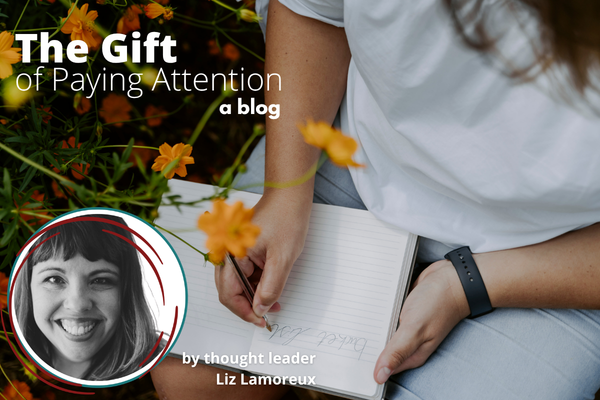
Let me give you a little optional homework: Get a notebook and use Mary Oliver’s list to reflect on your day. Get quiet and find space where you can just be you for a bit. Think about your day. What do you remember? What did you notice? Get curious. Name some feelings you had. Then write some observations down about it all. Consider doing this at the end of each day. You could also try this with a problem you’re encountering at work or in your personal life. You might even decide to create a mindfulness practice where you take a walk and then go through Mary’s steps.
Give yourself the gift of paying attention and getting curious as you move through your life in your corner of the world.